Showing posts with label New Zealand. Show all posts

Saturday, 10 January 2026

Getting my New Zealand driving licence! Restricted Licence — Part 3 (The Practical Driving Test)

Getting my New Zealand driving licence! Restricted Licence — Part 3: The Practical Driving Test

In Part 3, I’m going to write about my experience of sitting the Restricted Licence practical test. If you haven’t read them yet, Part 1 and Part 2 might also be helpful.


Up to this point, I’ve talked about supervised practice and lessons with an AA instructor. But questions like “When should I sit the test?” and “How much practice is enough?” are honestly very subjective—it really depends on the person.

Timing: when to sit the practical test

In my case, I practised in parallel with a supervisor and with an AA instructor. Through several “mock practical test” lessons with the AA instructor, I was able to get advice on how close I was to being ready for the real test.


Toward the end of my practice, for example, I was told something like: “Your general driving is probably fine for the practical test. But you should spend the next two weeks focusing on parking. If you were going to fail, it would likely be because of a parking mistake.” Based on that advice, I decided I was ready to book the test.


Booking and preparing for the test

For the practical test, I recommend allowing about one full hour in your schedule. You book online (via the booking site) and pay the test fee. When you book, make sure you select the test location where you plan to sit the test, and then choose your preferred date and time.


You can book through the New Zealand Transport Agency here:

When I sat my test (around 2025), I often found available slots about two weeks ahead. However, it sounds like booking can become much harder depending on the season. During busy times—such as summer holidays, when many university students try to get their licence—it can apparently stretch to 2–3 months. So it may be difficult to get the location and time you want unless you book early.


What the test involves (a simple overview)

On the day, you arrive at the test centre and drive on real roads with the examiner. At the start, the examiner checks the basics during normal driving, such as:

  • General driving and safety routines

  • Mirror checks (often the “three-point check”)

  • Blind spot checks

  • Speed control while driving

If everything goes smoothly, it seems common to be asked to do a parallel park on a side street within about the first 10 minutes. You need to be able to do this properly and safely.


After that, you continue along a range of routes, driving on local roads and sometimes (depending on the area) motorway driving as well. If everything is satisfactory, you’re told you’ve passed at the end, and you receive a paper temporary licence.


How the driving test day went (this is what it was like for me)

You’re usually told to check in 30 minutes before your booking time, so I recommend arriving at least 30 minutes early.


After checking in, if it’s your first attempt, you’ll complete the application form. Then you do an eyesight test, and they also take a photo for your licence. The good news is: if you don’t pass on that attempt, you generally won’t need to redo the photo and the application form the next time.


After waiting until your scheduled start time, several examiners come out and call people in order. You greet your examiner and then walk with them to your car.


One important thing is that you need to bring your own car for the test. I personally think it’s safest to use the same car you’ve been practising in with your supervisor. Also, because you’re not yet allowed to drive alone before passing the Restricted test, you’ll need your supervisor to drive you to the test centre. That means your supervisor will need to accompany you (sitting in the passenger seat) on the way there. If you want, the supervisor may also be allowed to sit in the car during the test (that’s how it was explained to me).


Vehicle check before the test, and an important note about the start

Before the driving begins, the examiner checks the car. They confirm things like whether the mirrors can be adjusted properly, and whether the indicators, lamps, and lights are working. After that, you’re given safety instructions—and then the test begins.


The test starts the moment the examiner says something like, “Okay, please exit this parking area safely.” From the very first movement, you need to do your mirror checks and safety checks properly. I really felt that it’s important not to relax even at the very start.


During the test: the basic rule is “follow the road unless told otherwise”

One key rule the examiner told me was: unless you receive a specific instruction like “turn right at the next corner” or “turn left at the next corner,” you should basically keep following the road as it goes.


So even if you come to a T-intersection or a crossroad, if you are not instructed to turn, you continue straight. It can feel a bit confusing at first, but I think understanding this rule helps you stay calm during the test.


If you make a serious mistake early, the test may end immediately

This part is a bit strict, but I was told that if a major error happens early in the test, you may fail on the spot and return to the test centre without completing the full route. When I went, I actually saw a few people come back relatively quickly.


A common pattern seemed to be people who hadn’t practised enough with an instructor, and came in without fully understanding the rules—then made an error around the first turn or early intersection and had to return. That was the general impression I got on the day.


My result: I passed on my second attempt (but the first attempt…)

I personally sat the practical test twice and passed on my second attempt. My first failure was, surprisingly, for speeding.


Looking back, I had done a lot of practice both with an AA instructor and with my supervisor—but the car I practised in with my supervisor was different from the car I used on the test day with the examiner. When the car is different, the accelerator feel and how quickly the speed builds can be slightly different, and I don’t think I was fully used to that. As a result, I went just a little over the speed limit and that was picked up. Because of that, I returned after about 20 minutes and didn’t even make it as far as the motorway…


For my second test, I went in with a strong focus on speed control. I also paid close attention to parallel parking, following distance, and roads where the speed limit changes depending on the time of day. This time, I completed the whole route, and after about 40 minutes I returned to the test centre.


As soon as we got back, I was told, “You’ve passed,” and I received the paper temporary licence. The proper card licence arrived by mail later—about a week afterwards.


Summary

Since this was the Restricted Licence, I haven’t got my Full Licence yet. When I eventually do, I’d like to write another post about that experience too.


That’s my experience of getting my Restricted Licence. I hope it’s useful for anyone who is planning to stay in New Zealand for a while and is thinking about getting their licence.


And if you haven’t read them yet, Part 1 and Part 2 might also be helpful.

--

Japanese version of this article is available here

Getting my New Zealand driving licence! Restricted Licence — Part 2 (Driving Practice)

Getting my New Zealand driving licence! Restricted Licence — Part 2 (Driving Practice)

Recently, I got my Restricted Licence in New Zealand, and I’m sharing what the experience was like. If you’d like a bit of background first, Part 1 is here.

From a “forever Learner” to aiming for the Restricted Licence

My situation looked like this:

  • I had been on a Learner’s licence for years.

  • I had no driving experience in Japan.

  • I felt nervous about driving and didn’t feel confident.

  • I live in Auckland.

  • I work during the day.

To get my Restricted Licence, I did the following:

  • Practised driving with a supervisor

  • Practised driving with a professional driving instructor

  • Reviewed road rules

  • Sat the Restricted Licence practical test (I passed on my second attempt)


In this Part 2 post, I’ll cover the first two items: practising with a supervisor and practising with an instructor.

Practising with a supervisor (my experience)

In the New Zealand licensing process, once you’ve got your Learner’s licence, the core of your practice is driving on the road with a supervisor.


Who can be your supervisor?

First, there are requirements for the supervisor. They must have held a Full Driver Licence for at least two years. Your supervisor sits in the front passenger seat, and you practise within the rules and time restrictions that apply. In my case, my supervisor was a family member. Many people ask family, but it seems some people ask friends as well.


How do you choose practice locations?

When you’re a beginner, it can feel scary to jump straight into normal traffic, so choosing the right practice locations at the start felt very important. I was truly starting from zero, so my very first practice was in a large, empty car park. I went to a wide, quiet car park and drove around inside it first, just to get used to the feel of the car.


That said, some car parks are suitable for practice and some are not (either because they’re not appropriate or because it’s not allowed), so I think it’s important to check the rules and make sure you’re practising in places where it’s permitted.


The next step, of course, becomes practising on public roads. I chose areas near my home where traffic was very light—places with lots of commercial facilities near the edge of town, where it was quieter and easier to practise. In particular, I looked for a few places that had things like cul-de-sacs, simple straight roads, or roads where you could make an easy “loop” and drive around the same route repeatedly without too much pressure.


How practice and improvement worked for me

My general routine was: my supervisor would drive us to the practice location first. Once we arrived somewhere that felt “relatively safe and suitable for practice,” I would switch into the driver’s seat and practise from there. This approach meant I didn’t have to immediately handle difficult roads, and I could focus on driving more calmly.


In the beginning, I was very nervous, and it was much more tiring than I expected. So I kept each session to a set length, and I tried to practise at times when it was bright with good visibility, and when the roads were as quiet as possible. For me, that felt like the safest way to build confidence.


I also practised with an AA instructor in parallel (more on that below), and I think that combination helped a lot. While continuing supervised practice, I improved little by little. Later on—really in the second half of my journey—my supervised practice started to include things like parking practice and driving on the motorway. But that was genuinely “later on,” and I don’t think it’s necessary to push those things too early.


Start by choosing good locations, and expect it to be a long game

In New Zealand, supervised practice is the main way most people build their skills. That’s why finding “good practice locations” matters so much. If possible, I think it’s even better to practise near the driving test centre—around the area where you’re likely to drive during your test.


And one last important reminder: you must display your Learner’s Plate (the L plate) on the car. It’s easy to forget, but it’s essential. If you keep following the rules and practise steadily, you can build confidence step by step.


Practising with a driving instructor (my experience)

Where do you find an instructor?

In my case, alongside my supervised practice, I also took lessons with an AA instructor. AA lessons can be booked through the AA website, and if something comes up, there’s a system for cancelling or rescheduling. I found it very convenient and easy to manage bookings.


More information on AA driving instructors is here:

AA has many instructors, and I do think “fit” matters. My suggestion (based on my experience) would be to try lessons with a few different instructors at the beginning, and then once you find someone you work well with, continue with that person until you pass.


AA member discounts and lesson packs

Of course, lessons cost money, but AA members can get a discount. Also, if you prepay for a “5-lesson pack,” it works out a bit cheaper than paying one by one. I bought two 5-lesson packs and did a total of 10 lessons with an AA instructor.


Choosing the right area for lessons

One of the most important things for me when learning with an instructor was location. Since you’ll eventually sit your practical test, I recommend practising as close as possible to your test centre, with an instructor who knows that area well. If you’re planning to take the test locally, your instructor can teach you routes that are commonly used in the test and explain “local tricky points” that are specific to that area.


What the first lesson looked like

Out of my 10 lessons, the first few were truly “beginner warm-up” sessions. We focused on getting comfortable with basic control and building familiarity with real road conditions. Later on, we added parking practice, and I drove on the motorway for the first time with the AA instructor. After practising safely that way, I then continued that kind of practice with my supervisor during my own sessions.


Also, because the instructor doesn’t know your driving level at the first lesson, the first session often feels like a short loop around nearby streets—partly as a way for them to see your habits and current skill level. Based on that, the lesson plan for the second session and beyond gets shaped. Unless you’ve already practised a lot and you only want to do mock tests, taking just a single lesson may not be the most effective use of an instructor.


Later lessons and working towards a mock (practice) test

In the later lessons, almost every session became “route practice with a mock test in mind.” For example, if normal driving was fine but parking needed work, we would focus on parking. Or if a specific roundabout felt difficult, we would practise that roundabout repeatedly. Being able to target weak points like this was a major benefit of learning with an instructor.


Mock-test style lessons were especially valuable

What I personally found most valuable was the “mock test” style lesson option. It’s very close to the real practical test: you drive a commonly used test route with the instructor, and then you get feedback afterwards. They tell you very clearly what you did well, what needs improvement, and even whether you would likely pass or fail if you sat the test that day. Because I felt the New Zealand practical test was harder than I expected, this mock test was especially important for me—and I’m very glad I did it.


That’s the overview of how I practised. Next, I’ll finally share my practical driving test experience.

---

The Japanese version of this article is available here

Getting my New Zealand driving licence!: Restricted Licence Part 1

Getting my New Zealand driving licence!: Restricted Licence

I’ve been living in New Zealand for quite a while now, and… I finally got my driving licence (Restricted Licence)!! So, I’d like to share the overall process and my personal experience in this article. 

The New Zealand driver licensing system

New Zealand currently has a three-stage driver licensing system. In simple terms, it looks like this:

1: Learner’s licence

  • This is a “paper” learner licence (a provisional licence).
  • Requirements: You need to submit an application form, pass a written test on road rules, and complete an eyesight test and a photo (you must attend in person).
  • What you can do: You can practise driving on the road as long as a supervisor is always in the front passenger seat. You must display L plates. There are restrictions on what times you can drive.

2: Restricted licence

  • This is a restricted provisional licence.
  • Requirements: You must pass a practical driving test. You will need to provide the application form again, and you’ll also need another eyesight test and photo.
  • What you can do: You’re allowed to drive on your own. You can also carry passengers if a supervisor is always in the front passenger seat. There are restrictions on what times you can drive.

3: Full licence

  • This is your full licence.
  • Requirements: You must pass a practical driving test. You will need to provide the application form again, and you’ll also need another eyesight test and photo.
  • What you can do: Basically, there are no restrictions.

For more detailed information, see here:

Why I recommend getting a licence

If you’re not planning to live in New Zealand permanently, you may be wondering whether it’s worth getting a licence. Here are the application fees: https://www.nzta.govt.nz/driver-licences/licensing-fees/licence-fees

Even if you don’t drive, a Learner’s licence is useful as ID

  • The Learner’s licence is relatively easy to get, and it’s extremely handy as an ID card.
  • It means you don’t need to carry your passport around all the time.
  • It’s also fairly straightforward now because you can study road rules using an app.
  • Cost: If you pass on the first attempt, it’s around NZD 100.

A Restricted licence expands your freedom a lot

If you’re living in New Zealand long-term, having a car is incredibly convenient. In fact, outside the major cities (Auckland, Wellington, Christchurch), it can feel like a necessity for everyday life. I live in Auckland, so I managed for a long time using public transport, but honestly, I wish I’d gotten my licence earlier.

The practical test is quite strict. It costs around NZD 160 for the first attempt, and about NZD 100 from the second attempt onwards. Many people end up taking the test more than once.

A Full licence has no restrictions

If you want to drive with passengers freely (without the restrictions), you’ll need a Full Licence. That said, many people are happy staying on a Restricted licence for a while—especially if they just want to be able to drive themselves and don’t feel any urgency to upgrade. For things like car insurance or rentals, having a Full Licence is often an advantage. But the practical test for the Full Licence also seems to be quite strict.


In my case: I was basically a “forever Learner”

In my case, I got my Learner’s licence fairly early, but then I didn’t try for the Restricted licence for years. The main reasons were that my family could drive, and living in Auckland meant I could get around by bus and train… 

But I started wanting to be more independent. And I also realised that if anything happened to the family member who could drive, I would really be stuck. That’s why I decided to go for my Restricted Licence this time.

I’ll share what the process was like in the next post (Part 2).

Thank you for reading up to here.

---

The Japanese version of this article is available here

Greenstone (Pounamu) Necklace-Making Workshop

Greenstone (Pounamu) Necklace-Making Workshop


NZ greenstone (Pounamu) is a popular souvenir in New Zealand. In te reo Māori, it is also called pounamu. Buying a piece from a shop is wonderful, but have you ever thought, “I’d love to make one with my own hands”?


Recently, I joined a workshop where you make a necklace using pounamu. It was held at a studio in East Auckland, starting at 10 a.m. and running for almost the whole day. We began by choosing our stone from a selection of roughly cut pieces. I really enjoyed being able to pick a stone while thinking about who it might suit and who I might like to gift it to.


This particular workshop was for making a halfmoon-shaped necklace. Here is the pounamu I chose—the yellowish one on the left. It’s not a colour you often see in shops; it felt more like the kind of piece you might see in a museum. I loved how unique it was. On the right side of the photo is the grinding stone.


For the making process, we used whetstones and mechanical grinding tools, slowly shaving down the edges to shape the piece. Once the rough shape was done, we used files and then sandpaper in stages, taking time to smooth and refine the surface. At the end, the stone was polished with a machine, and then we threaded it with cord to finish. You can even choose the colour of the cord—but for me, the hardest part was braiding and finishing the cord.


On the day, it wasn’t just about making the necklace. We also heard cultural stories connected to pounamu, and it was special to be able to learn about Māori culture while creating something with my hands. I also learned an important cultural custom: in Māori tradition, the first piece you make should be given to someone else as a gift. Some people say it can be okay to wear it yourself first, but the core idea is that “the first one is a gift.”


Ta-da—here it is, finished!


I really enjoyed the quiet, hands-on time—almost like having a conversation with the stone while I worked. It was a great refresh, and the making process itself was so much fun.


If you’re looking for a meaningful present for a loved one—or simply want to create something special—why not try making your own pounamu? The more time you spend shaping it with your own hands, the more personal and precious the finished necklace becomes.


The workshop I attended was this one: Aotearoa Bone and Stone: https://absca.nz/ 


Thank you very much for reading! 

Japanese version is here.

Tuesday, 27 February 2018

Fresh Walnuts Picking Season in New Zealand!


Time passes so quickly, February 2018 is almost over.


In New Zealand, it is end of summer now, and is a season for fresh walnuts.


Have you foraged this season’s walnuts yet?


IMG_9944


Walnuts Picking?


Yes walnuts!


They can be roasted to eat as is, or can make an awesome addition to any baking foods like cookies, muffins or cakes.


Alternatively, roasted walnuts can be added to salad or stir-fry.


They are rich in vitamin E and unsaturated fat, making walnuts really healthy food for our body.


But when you have been only buying bagged walnuts out of shell, we tend not think about where they come from.


Walnuts are seed (or core) part of green fruits that grows on a walnut tree.


When the fruit matures, green fruit naturally drop from the tree.


As the fruit start to get rotten, the inside (walnut shell) becomes exposed.


At this timing, if you visit your local walnut tree, you can pick many natural, fresh, organic walnuts from under the tree!


And this season is usually around February in New Zealand.


Where Can I Find Walnut Tree?


Walnuts tree can be found in various places in New Zealand.


Some people have them in our garden, but if your garden doesn’t have a walnut tree, then try looking for one in...


  • Parks
  • Roadside
  • Car parks with lots of green areas surrounding it
  • Garden of churches and chapels


Walnuts tree typically grow really tall, so you are unlikely to find a walnut tree in a small park.


If there is a large park with many deciduous trees, you might find walnut trees, too.


Around February, walnuts trees would bear some green fruits, about size of kids’ fists on the tree.


Some are found fallen on the ground underneath the tree.


So looking for a tree with green fruits on it or underneath it around February may be the easiest way to spot a walnut tree.


Once you are used to finding a walnut tree, you will be able to spot them by looking at tree shape, skin and leaves.


Also, there are some “foraging” maps available online. You might decide to use these as a guideline to find our first walnut tree.


https://www.stuff.co.nz/life-style/food-wine/84570132/foraging-in-new-zealand-how-to-find-free-fruit-in-your-city


As long as you adhere to basic manners and good practice, there should not be any problem picking walnuts off the ground.


But hurting the tree or shaking the tree to access fruits on the tree should not be tolerated.


Also, even if you spot a good walnut tree, if it is on someone’s private properly you must not access it without asking for a permission from the owner.


How to Pick Fresh Walnuts


In the right season, walnuts fruit will naturally fall – so all you have to do is pick them off the ground.


IMG_9942

Green fruit on the left is the walnut fruit.


If walnut shell is fully exposed without any fruit, then it may have been there on the ground for too long.


If the walnuts feel very light or shell is very fragile, and it is most likely already rotten inside.


If the fruit outside walnuts shell is fully intact and really firm, then the fruit may have fallen prematurely and inside walnuts may not be very tasty.


Apparently, a good walnut is the fresh walnut shell with fruit still adhered on it, but the fruit outside is starting to rot and turned black.


But I guess, you just don’t know what comes out of the shell until you crack it open...


We picked ours with either some fruit attached, or fully exposed ones as long as they feel heavy and hard.


Try squeezing walnut with hand, if they crack easily then it is definitely rotten inside.


One thing to be careful is that, liquid that comes out of walnut fruit stains your hand brown.


They do not come off easily even after washing our hands with soap.


So if you do not want your hands to get dirty, you might want to use vinyl gloves to prevent the liquid from touching your skin.


Likewise, you should not wear your new, favorite cloth that you do not want get stained on.


Picked Some Walnut –!!


So we came home with a bag of walnuts from our local park.


IMG_9945


Some looked quite fresh and had just fallen off the tree, while others looked like they had been on the ground for a while.


The park we went to had more than two walnut trees on site, and each tree produced walnuts with difference sizes.


We believe that we were a bit late for the season, as many good ones were already picked, and many rotten ones were left on the ground.


IMG_9946

Some with fruit on, look really clean when outside fruit is taken off.


There are some tips and ways you can clean your freshly picked walnuts on the internet.


We washed ours in a tub of water and scrapped any adhered fruits from the nuts manually, using brush.


We then dried our walnuts under the sun for a while.


IMG_9950

Look some are huge! I think they are from different variations of walnuts.


We just picked and prepared them like above, but we plan on cracking them open next, and either roast the content to eat them, or use them for cooking.


You could roast walnuts while they are in the shell, but this time we prefer to crack it open first so that we can get rid of rotten ones and select good ones for eating.


In our regular life, walnuts come unshelled in a plastic bag from the supermarket, normally.


So it was quite a new experience picking and washing our own walnuts. Our children enjoyed it too.


Now, it would be perfect once we manage to make a yummy walnuts cookies from these... !


Planting Walnuts to Grow Walnut Seedling...?


If you get a hold on fresh walnuts from the latest season, it may be fun to keep some for planting next spring.


Walnuts break out of dormancy and germinate in the spring after experiencing the cold winter.


So if you want to plant some walnuts, keep some good looking walnuts wrapped in wet paper, put them in a plastic bag and store in the fridge, then plant them into a pot next spring.


According to some sites on the internet, fresh walnuts has pretty good success-rate for germination.


If you keep several walnuts in the fridge for next season, the chance is that you will see at least one germinating and growing.


You need to be careful if you decide to plant walnut seedling into your garden, as a walnut tree grows into a very large tree in years time.


Walnut trees also produce and release a type of toxin from their roots, that prevents other plants from growing.


So while it would be a great fun to plant your self-picked walnuts in pots and watch them grow, you might want to keep them in pots and not directly planted in your garden.


We kept a few walnuts in our fridge to plant next spring.


It would be a fun experiment to do in the garden with children!


Summary


  • February - Walnuts picking season in New Zealand!
  • You can often spot walnuts trees in public parks
  • Be careful picking walnuts trees as they can stain
  • Keep some for germinating experiment, but planting directly into a garden requires some thought


Some people sell fresh walnuts from their garden on Trademe or on a road-side market around February so keep eye out for them if you want locally grown organic walnuts.


Happy walnut picking/buying/eating!

Wednesday, 18 October 2017

Growing Perilla Purple (Red shiso) in New Zealand


Spring has come to New Zealand, and I started on this year’s vegetable garden.


One of plants that I am really looking forward to harvesting is Red Shiso, or Perilla purple.


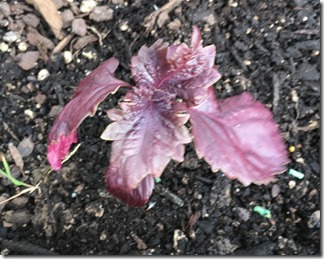
IMG_5373


Red Shiso: A Great Traditional Japanese Herb


In Japan, people like making sour, pickled plums called Umeboshi.


They are such a bright red in color, despite of young plums being green or pale yellow.


The reason why they have such red color is because, plums are pickled with additional ingredient: red shiso (Perilla) herbs.


Red shiso herb has purple pigment, which turns very bright red when mixed with acid.


So when red shiso is used in combination with sour ume Japanese plums (that have very acidic juice), it produces that bright red color.


Red shiso themselves have very nice, original fragrance that matches well with Japanese dish, raw sashimi or rice.


So I wanted to grow my very own Red shiso in my garden, hoping that I will be able to harvest my own red shiso to use for cooking.


Red shiso is called by various name. See this wikipedia page for Shiso herbs. –>  https://en.wikipedia.org/wiki/Shiso


They are sometimes called Perilla red or Perilla Purple.


Growing Perilla purple from Seeds: Watch out for birds!


So I picked up some Perilla purple seeds from Trademe.


In general, Perilla plants grow very well in full or half shades, and are not very picky on soil conditions either.


They do prefer well-drained soil, though.


They are energetic and supposed to be quite easy to grow.


However, their seeds take a while to germinate; approximately 10 days ~ two weeks for germination.


Germination requires exposure to sunlight, so you cannot bury seeds too deep and cover completely with soil.


You need to sow them shallow, and cover them with only a thin later of fine soil.


This sounded rather tricky for me, so I decided to let seeds germinate on wet tissue papers, then plant them into small pots once they start germinating.


Two weeks waiting and watering seeds for germination is very long….  especially compared to my cabbages and beans sprout really quickly only after 2-3 days!


It took nearly one month for perilla seeds to germinate and produce small new leaves.


I decided to bring pots outside, now that seeds have started to grow 2-3 cm tall ….. but this was a BIG mistake.


One morning when I came out of the house, many Perilla purple seedlings that were growing in my pots all disappeared!


Did they all die and melt down over night…. ? No.


It is most likely that bird outsides ate them all.


Even in Japan, birds like sparrows love Perilla seeds and sprouts.


I mean, even humans eat Perilla leaves and seeds, so they will be some delicious treats for wild birds.


Come to think of it, I did hear many birds jumping close by the window this morning…..


So my first attempt to grow Perilla purple from seeds, failed and I wasted a whole month….. orz


Trying again!! Growing Perilla Purple!


So I decided to try again.


Perhaps this time, I will grow them to be a larger size plant indoors first, then take them outside.


IMG_4169

Perilla purple seeds germinating on wet tissue papers; it takes two weeks to get to this stage.


IMG_5375

Some main new leaves starting to come out…. 2-3 cm tall.


IMG_5463

Plant size reached 10cm… Leaves are much larger now too!


IMG_6625

Too early to relax just yet, but I replanted the into larger planter.


Planter is placed under our room where we regularly hang washings and put other outdoor items, so hopefully birds will not come near it.


Perilla plant is still young and small, but when you pinch an end of a leaf, you can smell its characteristic fragrance…. yummy smell!


When plenty of leaves are ready for harvest,  I may use the to make Shiso-drinks (Perilla tea), or perhaps salted-perilla red flakes that tastes great on rice.


I just cannot wait for them to grow larger and start producing more leaves for harvesting!

Wednesday, 27 September 2017

Spring is here in NZ! Snails are here too! Snail & Slug pellets work really well….


Spring is here in New Zealand; temperature is getting warmer, day-light saving started and we have a lot longer sun!


It is a start of season when we can sow some seeds and see them grow.


Our children love growing plants in our garden. They water them and enjoy watching vegetables grow on them.


Unfortunately we had snail invasion in one of our vegetable garden….. there are some pictures of snails below, so be warned if you don’t like watching insects.


Enemy of vegetable garden: Snails and slugs


At the end of winter, we planted some seed potatoes in our home garden.


Potatoes are very easy to grow in home vegetable gardens. If you plant them late winter or early spring, they will grow fast during spring, and you can start harvesting in early summer.


Our potatoes were growing pretty well, until this happened to one of our fastest growing plant….


IMG_5426

Noooo!! Being eaten!!


There are only stems left with hardly anything left of the leaves. We really should have done something before it gets this bad.


We have not spotted any worms and bugs that eat potato leaves yet, so we suspected slugs and snails to be the culprit.


It will only get worse as the temperature becomes warmer, so we quickly headed to a gardening store.


Purchased Snail and Slug pellets!


At our local Mitre10, we went to the gardening section and purchased Yates Blitzem pellets for killing slugs and snails.


The reason why we chose this product was because it was recommended to us by a friend, who grows and sells vegetable seedlings.


Yates Blitzem:A famous product!

IMG_5422


For 500g, it was about 5 dollars? It was reasonably priced.


IMG_5425


Content looks like this. Blue-green colored small pellets.


These pellets contain poisons that attracts snails and slugs, and kills them when they touch or eat these pellets.


Because these are poisonous, you do need to be careful so that small children and pets will not touch them.


According to the instruction on the box, you place them on the soil about 5cm apart between each pellet.


We often grew vegetables in our garden, but this is the first time we use slug & snail pellets like these.


Snail & Slug pellets are so effective!


Following day after placing Snail and slug pellets in our potato garden…. it is really effective. How do we know that? well….


There are many snails laying in our potato garden floor! They normally hide pretty well so we cannot spot them.


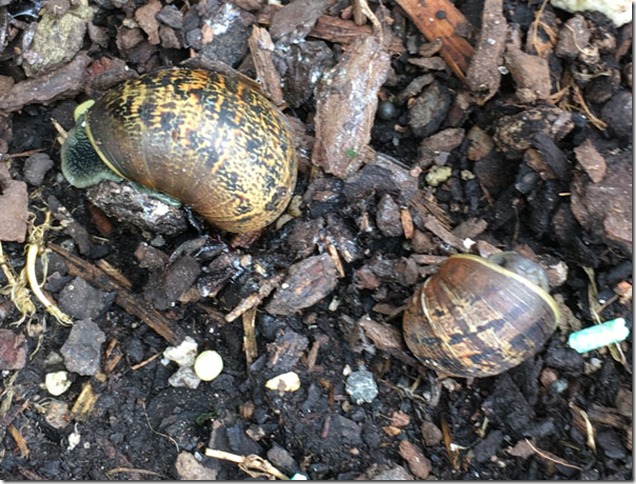
IMG_5429


Like these snails… there are many of them, here and there…


Are they dead after eating the snail & slug pellet? So we had a closer look…


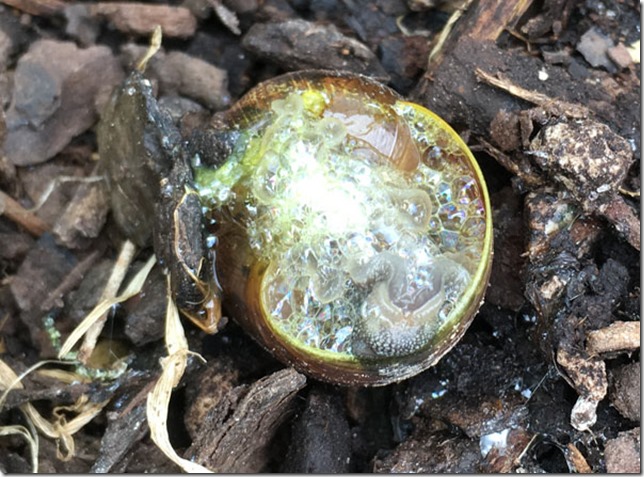
IMG_5430


This one is upside down, cannot move well and bubbling!


EEEEEEK! Gross & scary! I feel so bad for them!! (although I tried to get rid of them)


We removed these intoxicated snails from our vegetable garden and buried them on a corner of our lawn.


There were about 10 snails just for this day. We were surprised how many there were, because we normally cannot spot them.


We were very impressed with how well these snail & slug pellets worked.


What is the active ingredient in Yates Blitzem?


The snail & slug pellets were so effective that I became worried what kind of ingredient is in them.


Specifications about Yates Blitzem are easily found on Yates official website below.


https://www.yates.co.nz/products/pest-control/snails-and-slugs/blitzem-snail-and-slug-pellets/


The main active ingredient is…. 15g/kg Metaldehyde


This “metaldehyde” is a compound frequently used for killing snail & slug, but also used sometimes as fire starter fuel for camping.

Refer to:Wikipedia 


There are a lot of information about metaldehyde on the internet, like this one.


“metaldehyde damages the mucus cells causing the creature to produce masses of slime and dehydrate. If not killed outright, it’s immobilised and unable to retreat to its daytime shelters”


引用元:http://www.slugoff.co.uk/killing-slugs/


Dehydration and paralysis!


So that’s why those snails were rolling on the ground after using snail & slug pellets…. Scary!


Of course these are toxic to human and other creatures too, if ingested. There are many reports of pets intoxicated after ingesting metaldehyde containing pellets. Even some cases of children as well.


After finding this out, I became concerned about using them on vegetable garden… do they get absorbed by vegetables that we are growing there?


But apparently, metaldehyde is used widely for protecting vegetables and crops from snails/slug all over the world.


Some say that these pellets are better than other spray-on insecticides that are directly applied to the plant.


Metaldehyde containing snail/slug pellets are also used for growing potatoes too.


参考:http://www.desangosse.co.uk/news/2015/02/23/potato-growers-urged-to-switch-to-the-better-metaldehyde-pellets-for-effective-slug-control


Tips for using Slug & Snail pellets


So some tips for using slug & snail pellets safely is as follows:


  • Do not let these pellets directly touch vegetables you are growing.


  • Place one pellet per 5-10cm as instructed on the package. Do not use more.


  • Do not sprinkle from above vegetables – place them directly on the ground.


  • These baits contain chemoattractant that attracts snails and slugs.


  • You could place pellets on a flat stone/dish next to the plant (not directly touching the floor) and let snail/slug come to it.


  • Place pellets near but outside of planters and pots. This way snails/slugs will be lured out of pots and planters to the bait.


  • Remove slugs/snails that ingested pellets and are found on the ground immediately.


  • You can also set up a trap by setting up “hide-place” for snails/slugs and place baits there.


Taken together, keeping a safe distance between your pellets and precious vegetables would assure that your vegetables will not be contaminated.


You do need to stay extra cautious that your pets and small children will not touch them.


It is probably a good idea to do this once at the beginning of spring ~ summer to kill off majority of snails as you should not use them when your crops are close to harvesting.


IMG_5431

Go potatoes! Grow!


Summary of Snail & Slug pellets


So I was very impressed with how effective these Yates Blitzem snail & slug pellets are.


It almost works too well that it gets me worried about chemicals inside.


But when you start thinking about it, you are not sure what kind of insecticides and chemicals people may have used for the commercial vegetables.


Regulations are in place, but it is up to the growers how carefully to use these chemicals.


We are better off in New Zealand because most vegetables are home-grown and I am sure we can trust our local farmers…


I can also understand how some people love organic vegetables.


But since I cannot afford to always buy organic vegetables, I guess I will wash our leafy vegetables really well.


Anyhow, if you have concerns about snails and slugs attacking your precious vegetable garden or flower garden…


as you can see above, snail & slug pellets work really well.


Yates Blitzem Slug and Snail Control 500g

Yates Blitzem Slug and Snail Control 500g

Friday, 25 August 2017

Fishing in Auckland with Kids 1: Okahu Bay Wharf

Our 8-year-old son loves fishing, and wants to give fishing a go on a sunny weekend. Being new to the area and having no prior fishing experience ourselves, we started off by looking for potential fishing spots with my children.


Fishing in Auckland with Family

New Zealand is a beautiful country surrounded by the sea, and Auckland being the “City of Sails”, fishing is a popular hobby. We see many people with their own boats and fishing gear enjoying fishing.

There are also various fishing boat charter services providing half-day or day-fishing tours. We would love to give these a shot one of these days.

But for now, our son is only 8-year-old, and we feel it is a bit too early to go on a whole-day cruise to catch a snapper. He might get too tired during the trip, or worth sea-sick. These tours are quite expensive too.

So we have been searching for a local wharf where we could get some fishing experience first. Ideally, somewhere easily accessible and safe with children. This time, we tried “Okahu Bay Wharf”, which was described to be a popular spot around Mission Bay, on the internet websites.

Tamaki Drive, Okahu Bay Wharf in Auckland

On the day, we traveled from Auckland CBD towards mission bay on Tamaki drive. The target location, Okahu Bay, was on the left hand side along the stretch of the Tamaki drive. It was right opposite to the car parking area of the Auckland’s famous Kelly Talton’s SEA LIFE aquarium.

We parked on the road along side the Okahu Bay wharf and unloaded our fishing gear, food and drinks.

At the Okahu Bay Whar, there is a long stretch of walkway out to the sea, about 150m in length. At the other end, the walk way splits up to T-shape.

It is fenced all the way, but with plenty of gaps so I would not take an eye off little ones. But we our primary school age-son was quite comfortable there. Overall it looked like a nice spot where family with kids could give fishing a try.

Okahu bay wharf

Okahu Bay Wharf is a Popular Fishing Spot

On the day we visited, it was cloudy with some wind and occasional shower. So it was cold day.

When we arrived Okahu bay wharf just before lunch time, there were already three groups of people enjoying fishing there. At the far end of the walkway, there was a group of young man who were enjoying swimming! Oh how nice it is to be young…..

After we started fishing, people with fishing gear kept on arriving every now and then. A lot of people came passed us just enjoying walks too, some with kids and some with dogs.

The wharf had visitors on even such a cold cloudy day, so I would imagine that on a sunny day of early summer, a perfect fishing day, this wharf will be quite busy with people trying to do fishing here.

At the end of walk way

No Fish for This Day!! (Danm It!)

We tried fishing for about two hours on this day. But unfortunately we could not catch anything ourselves. A guy who was fishing before us, had caught something that appeared to be Kahawai, a locally seen type of Arripis. It was quite large, not fitting his small chilly bin, as he was taking it home.

Other than that, no one else caught anything while we were at Okahu Wharf. According to some website or fishing forum though, you could catch some snapper by casting your line as far as possible in summer.

We did see some “hard-core-fisher” people who had really nice fishing gear and setting multiple of them along the wharf. So there is little doubt in us that this is a good fishing spot that attracts a lot of people.

We did not have any luck this time, but we would love to give it another shot at Okahu Bay Wharf.

Bring Your Own Fishing Gear (and Food!)

This Okahu Bay Wharf is a public domain and there is no entry fee for fishers. But it also does not have any manager on site or shops nearby. So you will need to bring everything you need with you, including fishing gear, bait, drinks and snacks.

We picked up our fishing bait at a petrol station between Auckland CBD and Okahu Bay. You can normally pickup bait and ice from a petrol station located within short range from a coast. They are often kept in a freezer outside of the shop with a lock, and you may need to ask the shop staff for them.  

So that was Our First Fishing at Okahu Bay Wharf

Unfortunately we were unable to catch anything, but we did enjoy the experience there. It seemed like a nice spot and we will definitely give it another shot! 

It is near mission bay so we could plan a whole day outing with kids; some fishing at Okahu bay wharf followed by icecream and playtime at the mission bay.

Tuesday, 27 June 2017

Chipmunks visit!


Chipmunks visit!

Earlier in the week, I took my children to a large famous indoor play centre, the Chipmunks!

What is Chipmunks?
Chipmunks is a franchise brand name for large indoor kids play centres. It is a play centre combined with café business, where you pay entry fee for kids to play, and once you enter parents could enjoying a cup of coffee and other café food. It is a great place to be, to entertain kids on those rainy gloomy cold days.


On the left is the play area; right is the café area with purple and yellow chairs.

Where can I find Chipmunks?
According to their website, they have 13 locations in the North island of NZ, and 5 more in the South island (checked in 2017). Out of those, 5 are located in Auckland region. They also have locations in Australia and Indonesia.
You can check on their homepage for more information.
On the above website, you can also find administration fee information, and also send enquiries about holding birthday parties there.

The place is busy on Saturday and Sundays…!
For this occasion, we went to the Chipmunks in Tauranga. It was cloudy day looking like it could shower any time, and it was Saturday morning. So we expected that the place would be rather busy, and we were right!

We entered the premise around 10am and at that time, half of the tables were empty; the place did not seem all that busy. However, we noticed that there were reserved table. Later we found out that there were three birthday groups on that day, and the place got busier and busier!

Inside is huge! Enough space for kids to bounce and run!
The kids play area is very spacious. When you enter, straight away you see a large air-filled slide where children could bounce and roll.


Hard to see in this picture, but there is a huge slide at the back! I would love to give it a go but no adult is allowed, sorry!

Main play area has a large slide and three story climbing area too.

Air-pressured sponge shooting gun – super exciting for all boys and girls!
The favorite area for my boys is the shooting arena, where you can use one of air pressure gun to shoot out soft balls made of sponge-type material. The ball is about the size of kids’ fists, and it is soft. You pickup those balls, put it in a air gun, and push a button. Then you hear the “Shhh!!” sound and your ball will get shot out flying.


The air-gun looks really large for kids and looks really cool!

Balls fall in the area underneath, and there little children are usually running around collecting some balls into a bucket or a bag.


A lot of fun just picking up balls too!

What to watch out for at the Chipmunks
Chipmunks is a café business, and it is not allowed to bring your own food and drinks. Instead, you have to purchase food and drinks there. They sell chips, nuggets, pizza, muffins and other variety of food you could eat for lunch.
They serve coffee too; a mum could probably enjoy a cappuccino while her child is playing in the play area if he/she is old enough to play by him/herself.

On the other hand, if you are bringing a little one, like preschool age, then you probably don’t want your eyes off them as it can be a bit dangerous with larger kids running and playing wild.

They do have an area especially for kids under 5, but even then a close supervision is required as it could still be dangerous if 2 year-old get bumped by a 5 year-old. Staffs are busy at the café and they do not have staff on watch for the play area.


Under 5 play area! They have a ball pool and some more toys inside!

Birthday party at the Chipmunks!
One of those days, I would love to plan a birthday party at the Chipmunks! It requires booking ahead of the time, so you will need to know when you want to hold it, and how many other kids you will invite.

That is a bit difficult for us as we don’t normally know which weekend we want to hold birthday parties, so we haven’t got around to using this service yet. But it would be an awesome party without doubt. You could organize food and gift packs, and even a visit from the famous Chipmunk!

How much does it cost to use Chipmunks?
The administration fee on entry is dependent on the day – e.g. if it is on the weekend, or if it is on school day, and the location (each location seem to have slightly different price plan).

The Tauranga franchise we went to;
1
2 year olds  $9.90
3
11 year olds $12.90 for non-school day,
And 1 – 11 year olds  $9.90 for school day
Supervising adult don’t get charged. The entry fee is one-off payment at the start, so it would be more for the money if you come in early and play for the whole day.  

Recommendations about Chipmunks
We have been to three Chipmunk locations, but all are busy on the weekends. Especially on the day with bad weather, all parents seem to think of the same idea….
But even on those days, it is quieter in the early morning, so my recommendation to go first thing in the morning as they open up.

It gets really busy around 11am-12pm, but some families who came early in the morning will leave without having lunch there, so it does calm down a bit in the afternoon compared with the peak time.

This time, we spent good three hours. Kids had chips and hot-dog munch meal sets, and I enjoyed my latte. It seemed though that even that was not long enough for my kids…. They were ready to play more!

Recent Posts